
One Month In: IUASP's First Three Journals Take Shape



IUASP officially launched on August 31, 2026. We began developing our first group of journals immediately afterward, and we are pleased to share our first update: just one month in, the first three journals have begun to take shape. The founding Editors-in-Chief and aims and scopes have been confirmed, and preparations for the journals' online launch are underway. Their official websites will be launched soon.
These three journals mark an important starting point in the development and wider reach of IUASP's new model of academic publishing. They are not only the first journals to take shape under IUASP, but also early examples of how this model can take shape in real-world academic publishing. Beyond these three confirmed journals, discussions are also underway for a number of additional journals, with more expected to take shape in the coming months. We look forward to sharing more as these journals continue to develop. Through these journals, we will begin to turn the ideas behind IUASP into the day-to-day work of building and running journals, and learn from that experience together with the academic leaders involved.
The First Three Journals
The first three journals focus respectively on acute and critical care, nanobiotechnology, and translational brain research. We are pleased to share the journal titles, Editors-in-Chief information, and aims and scopes of these three journals.
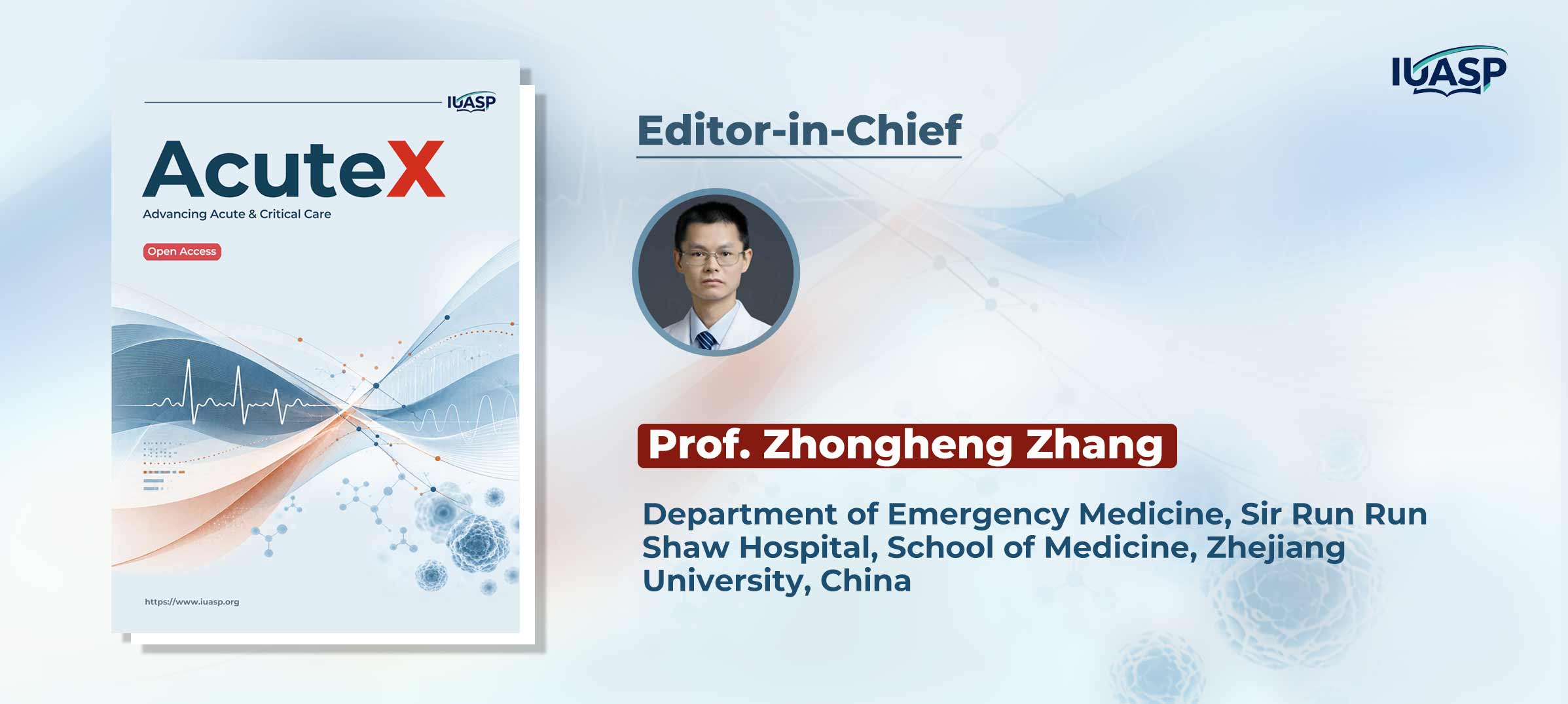
AcuteX is dedicated to advancing the science and practice of acute and critical care medicine across the entire continuum—from pre-hospital emergency response and resuscitation, through intensive care and perioperative management, to post-ICU recovery and long-term outcomes. The "X" represents interdisciplinarity, emerging technologies, innovation, and the unknown. Its core areas span acute and critical care medicine, emergency medicine and resuscitation, translational and basic science, clinical data science and precision medicine, and technological and digital innovation in critical care. The journal welcomes research across clinical critical care; resuscitation and emergency care; translational and basic science; technological and digital innovation in critical care; ICU operations, quality, and patient safety; recovery, rehabilitation, and survivorship after critical illness; and education, training, and global critical care.
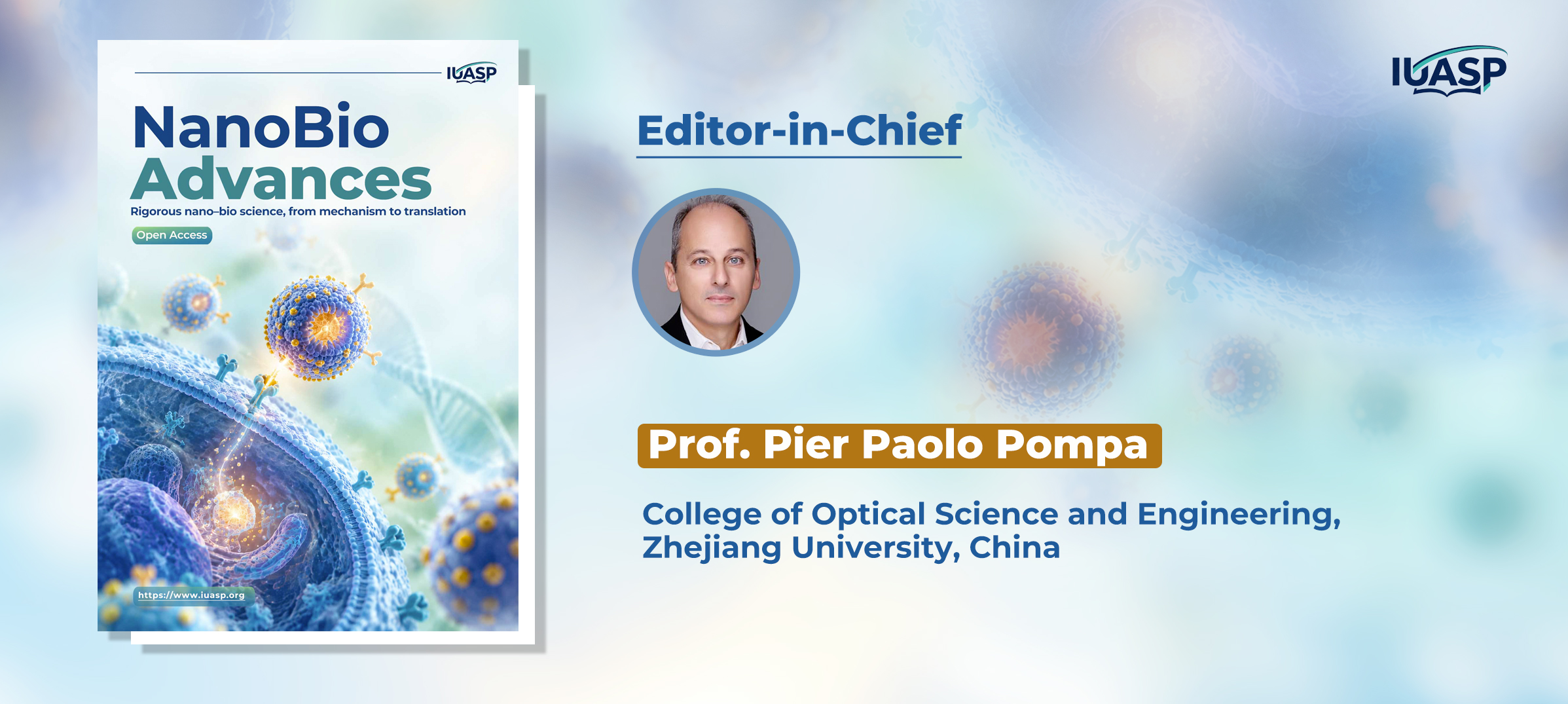
NanoBio Advances is dedicated to publishing rigorous research across the full spectrum of nano–bio science, from fundamental mechanisms at nano–bio interfaces to nanotechnology design, validation, and biomedical translation. Its core areas include nano–bio interfaces, nanodiagnostics, nanomedicine, nanozymes, and nanobiotechnology. The journal covers six key areas: nano–bio interfaces and biological identity, including protein coronas, cellular uptake, and immune interactions; functional nanomaterials and biohybrid systems, including nanozymes, plasmonic nanosystems, and nucleic acid nanotechnology; nanodiagnostics and biosensing; nanomedicine and regenerative nanobiotechnology; sustainable nanobiotechnology and responsible innovation; and AI- and data-driven nanobiotechnology. Across these areas, the journal emphasizes rigorous material characterization, biological validation, and reproducibility.
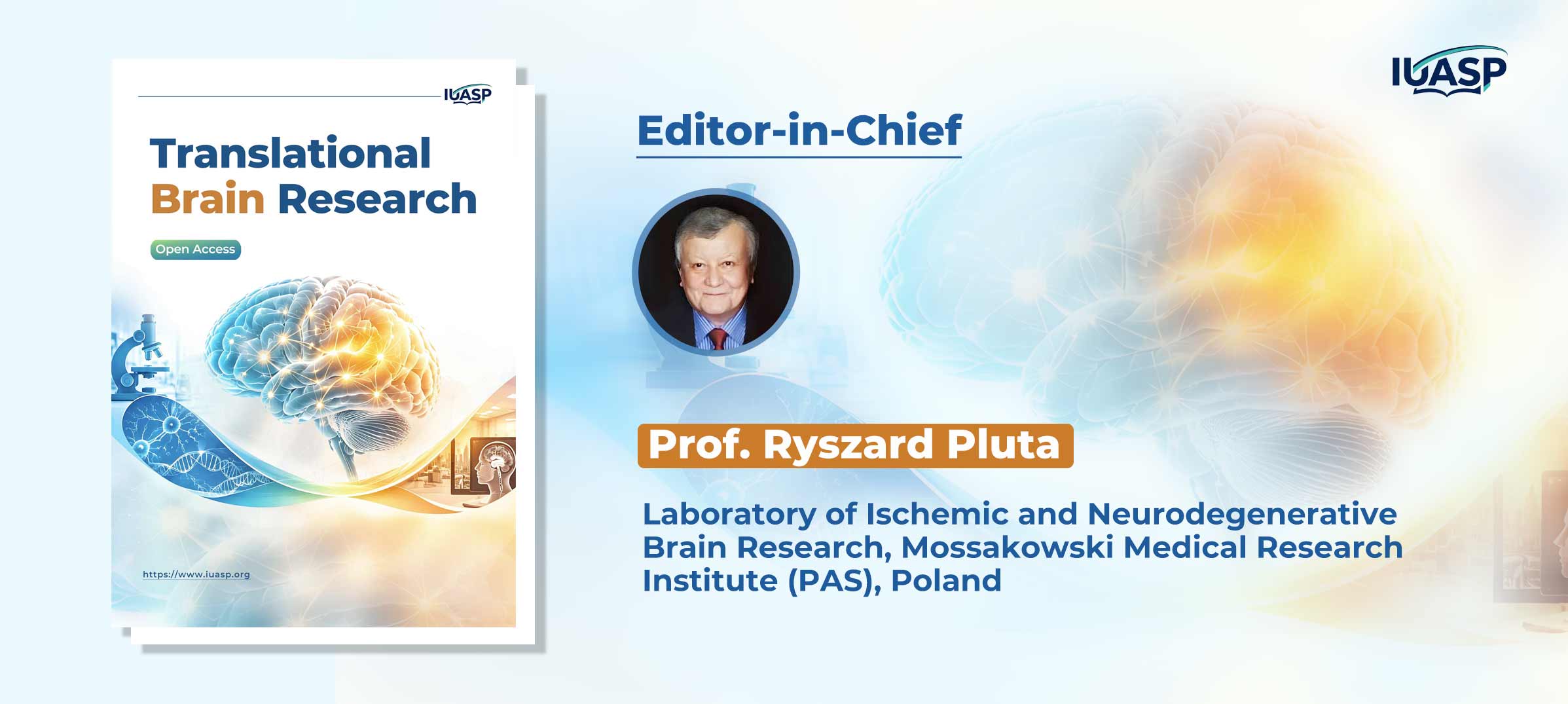
Translational Brain Research is dedicated to accelerating the translation of mechanistic discoveries into advances that treat brain disorders and improve brain function. Its core areas are brain disorders, brain function enhancement, neuromodulation, and brain–AI interaction. The journal focuses on the forward translational pathway from target identification and preclinical validation to early-phase clinical trials, clinical practice, and non-clinical applications, while also welcoming reverse translation from practice to basic research. Its scope broadly covers brain disorders; biomarkers, imaging, and neurophysiology; neuromodulation, brain–computer interfaces, gene/cell therapy, and drug discovery; humanized models, organoids, iPSCs, and AI/computational methods; mechanism integration and translational failure; neurorehabilitation and functional recovery; and brain function enhancement in healthy and non-clinical settings.
Shaping the Next Chapter Together
Over the past month, IUASP's invitations to prospective founding Editors-in-Chief have received a response that exceeded our expectations. We have received enthusiastic responses from nearly 100 experts from countries including the United States, China, the United Kingdom, France, Italy, Australia, and Spain. They include scholars from leading universities and research institutions such as Peking University, Shanghai Jiao Tong University, Fudan University, Nanyang Technological University, the University of Porto, the University of Granada, and the University of Sydney. They come from diverse research fields and bring extensive experience in research and academic publishing. The positive response from these experts also reflects, in part, researchers' demand for a fair, transparent, and efficient publishing ecosystem, as well as their recognition of the model advocated by IUASP, including recognition of reviewer contributions, open peer-review reports, post-publication discussion, transparent publishing operations, financial disclosure, and collective governance through membership.
Among the responses, Prof. Pompa, Editor-in-Chief of NanoBio Advances, who shared his strong support for IUASP's publishing model. He said, "I strongly agree with the publishing model of rewarding reviewers. I am convinced that this will become the mainstream model in the future. I, like most of my colleagues, can no longer devote large amounts of time to peer review for free, and finding qualified reviewers is becoming increasingly difficult. The only way to obtain timely, high-quality review reports is to pay reviewers." He also proposed the tagline "Rigorous nano–bio science, from mechanism to translation" for the journal, highlighting "rigor" and "the path from mechanism to translation" as central to its identity. These ideas closely align with IUASP's emphasis on quality first.
IUASP is new, and what encourages us most is not only the number of people we have been able to engage with, but also the openness of these conversations. Researchers have been willing to take the time to speak with us, raise questions, share their experiences, and express their thoughts openly. Their willingness to engage openly and actively gives us greater confidence to continue moving forward. We are also sincerely grateful to Prof. Zhang, Prof. Pompa, and Prof. Pluta. As the first academic leaders to join IUASP and lead these new journals, they have taken the first steps with IUASP to bring this new model of academic publishing from ideas into practice. Their participation represents an important first step, and we look forward to welcoming more academic leaders who share IUASP's vision to to join us in building journals and serving broader research communities.
If you are interested in helping establish a new journal as its founding Editor-in-Chief, or would like to join the editorial board of one of the confirmed journals, we welcome you to get in touch with us. You may also submit your idea for a new journal directly through New Journal Proposal.
To learn more about the new journal areas we are currently exploring and our broader vision for academic publishing, we invite you to read our previous news:
IUASP Invites Academic Leaders to Build and Lead New Journals →

No comments yet. Be the first to comment!